1900 year 2000 by William Bouguereau
fascinates the vision held by those who lived more than a century ago how we would live in 2000. These amazing cards that came in a chocolate brand portrayed in a somewhat naive, although sometimes successful, modern life as imagined at the beginning of the twentieth century. In the blog http://paleo-future.blogspot.com/search/label/1900s there are many more visions of other decades, some striking.
Thursday, November 26, 2009
Wednesday, November 11, 2009
How Long For Sleep Eze To Work
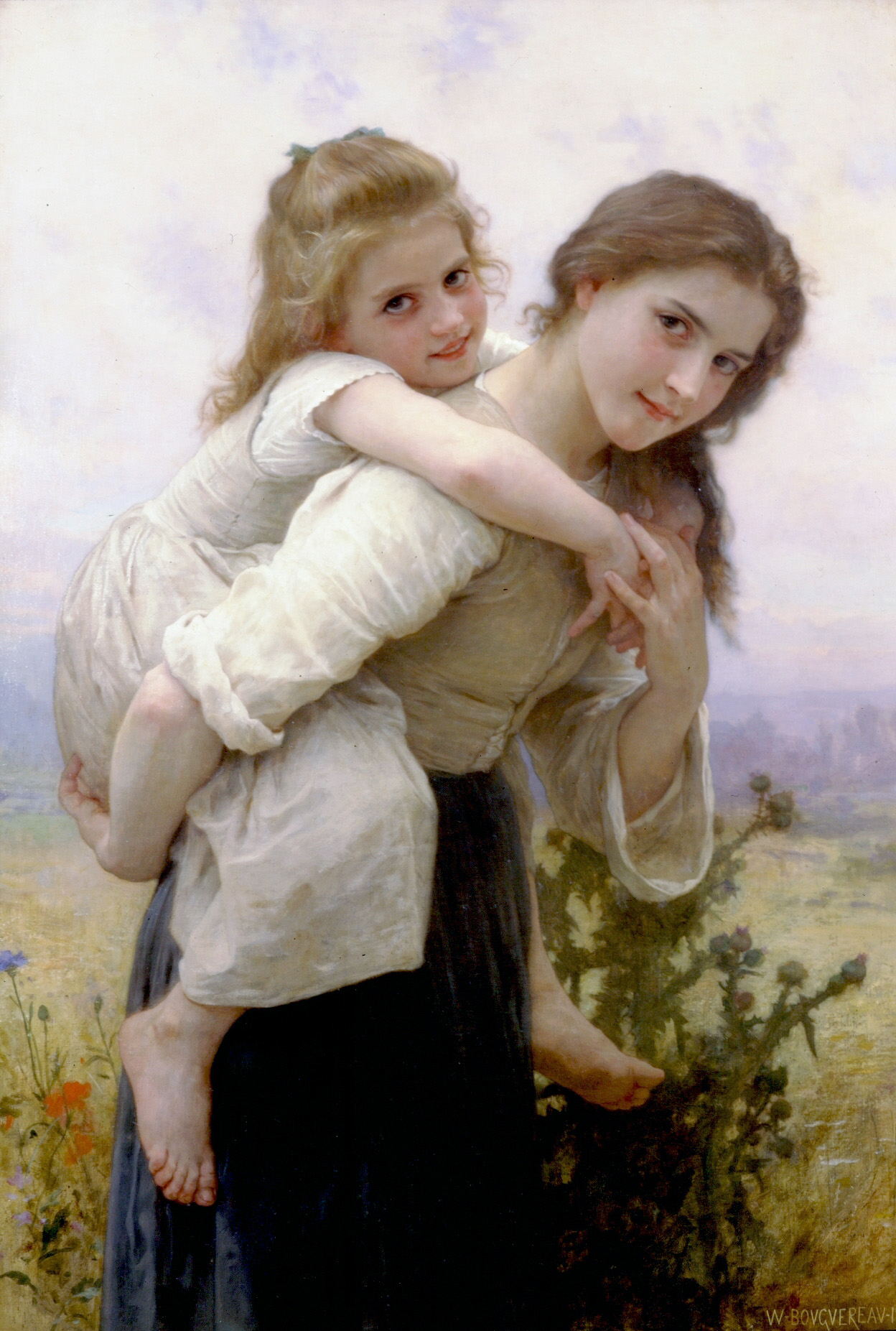
I think I'm in love with a painter, and wanted to share it with you (juas xD)
William-Adolphe Bouguereau (La Rochelle November 30 of 1825 - August 19 of 1905 ) Was a painter academic French. Among the personalities of the time they confessed admiration for his work include the romantic pianist and composer Chopin .
student at the Académie Julian in Paris , realistic paintings and mythological themes were exhibited in the annual exhibitions of the Paris Salon throughout his career. Although it suffered the indifference of the critics, perhaps because of his strong opposition to the then triumphant Impressionism , currently there is a new appreciation of their work.
Bouguereau was married to another artist Elizabeth Jane Gardner . Through his influence, many French art institutions first opened to women, including French Academy of Fine Arts .
I leave here some of his works (I recommend that you look some more, because honestly, nothing is wasted). There are some who seem photos ... hair look, look at the toes of the feet ... Is this not for love of the painter by his works?
http://rebecatabales.files.wordpress.com/2009/09/william-bouguereau-la_tricoteuse.jpg
http://upload.wikimedia.org/wikipedia/commons/e/e4/William-Adolphe_Bouguereau_ (1825-1905) _-_Not_Too_Much_To_Carry_ (1895). Jpg
http:// lacanciondelasirena.files.wordpress.com/2009/05/william-bouguereau.jpg
Amanda.
Thursday, November 5, 2009
Pictues Of People With Braces
The dog Hachiko
The other day I saw it advertised on TV a film about the dog Hachiko (not if you have seen the trailer). But I knew the story, I read some time ago in a book of Japanese culture. It turns out that the story is real and quite charming I must say ...
Hachiko was born in November 1923 in Odate in the prefecture, province Akita, northern Japan. It was an Akita dog breed, male and intense white. Hachiko luck when illuminated at 2 months of age was sent to the house of professor in the Department of Agriculture, University of Tokyo Dr. Eisaburo Ueno. The teacher took him to his home located near Shibuya station, where he proved a kind and friendly owner. The dog in turn adored him. Since then, Hachiko was not accompanying him to the university. But what it did was leave the house every morning with the teacher and walked with him to the Shibuya station. The dog watched as the owner bought the ticket and then disappeared into the crowd approached the train. Later, Hachiko would sit in the small plaza and waited there to its owner who was returning from work in the afternoon. This happened every day.
This is how the image of the teacher with his dog became familiar in Shibuya Station, and the story of the loyalty of this animal has spread around with ease. People passing through Shibuya always said this.
A tragedy broke the evening of 21 May 1925. The health teacher was not very good in those days and suddenly suffered a heart attack at the university. He died before he could return home. In Shibuya, the dog waited in front of the station. Soon news of the sudden death of Professor reached Shibuya. Many people immediately thought of the poor dog who had accompanied him every day. Several had the same attitude and went to the small square to convince the dog to return home, as if he could understand. The next morning, Hachiko was seen opposite the station, waiting for his master. He waited all day in vain. The next day I was there again and so it was day after day. The days became weeks, weeks months, months years and yet the dog was going every morning at the station, waiting the whole day and when the time came back his master, sought among all these strange faces he loved Him. Did not take into account climatic conditions, rain, sun, wind and snow did not prevent his daily pilgrimage to meet his love, loyalty to his human friend never died.
Hachiko's loyalty was demonstrated by an extraordinary effect among Japanese residents of Shibuya. He became a hero, the beloved figure of the area. Travelers who are absent for an extended period would always ask for him upon his return. In April 1934, the kind people of Shibuya hired Teru (Shou) Ando, \u200b\u200ba famous Japanese sculptor, to conduct a statue in honor of his friend Hachiko. Sculptor was happy to do this work and the bronze statue was placed in front of the station, where I used to wait Hachiko. Almost a year later, on March 7, 1935
Hachiko died at the foot of his own statue because of his age, but that did not stop its history and the statue of Teru Ando were made famous throughout Japan. During the war all the statues were cast for the production of arms, Hachiko did not escape this fate and unfortunately the sculptor was killed. But folks still remembering Shibuya Hachiko and his message of loyalty. So it was decided to form a Society for the replacement of the statue of Hachiko, and the company hired the son of Teru Ando, \u200b\u200bTakeshi Ando, \u200b\u200bwho was also an excellent sculptor. Today, the exquisite statue of Hachiko remains in the middle of the square in front of Shibuya Station. We can find about her sources, newsstand magazines and smiling people telling the story of Hachiko to small or not. On 8 April of each year marks a Hachiko in the plaza outside the Shibuya train station. The remains of Chuken Hachiko (in Japanese faithful dog Hachiko) rest alongside those of his master Dr. Eusaburo Ueno. In a corner of the burial of his own in the Aoyama Cemetery, Minmi-Aoyama, Minato-Ku, Tokyo.
Amanda.
Subscribe to:
Posts (Atom)